Hybrid Master in Local Food Policy
The Master’s programme trains specialists capable of devising and managing cutting-edge projects and initiatives in the field of sustainable food systems policy
Discover the project
The Master’s programme trains specialists capable of devising and managing cutting-edge projects and initiatives in the field of sustainable food systems policy
Discover the project
The URBAGRI+ project, co-funded by the European Erasmus+ programme, aims to organise the adaptation of a MOOC (Massive Open Online Course) on urban agriculture at European level.
Discover the project
Rural Connections is the operational heart of the PAC Network Academy, an initiative promoted by the Ministry of Agriculture, Food Sovereignty and Forestry and implemented by the National Rural Network in collaboration with universities, regions and local partners.
Discover the project
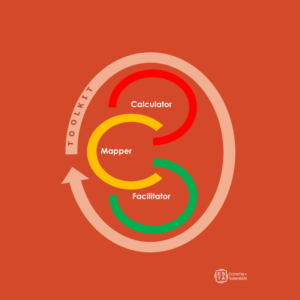
A civic technology toolkit designed to improve the socio-economic and environmental impacts of waste management through participatory approaches. Tested in Elinkine with ACRA; replicable and modular.
Discover the project
The project aims to decarbonise last-mile food logistics in five EU countries through pilot trials in Spain, France, Italy, Greece and Bulgaria to demonstrate the feasibility of sustainable food logistics. These pilot projects will utilise renewable energy sources such as solar power and biofuels to create carbon-neutral logistics solutions. Coordinated by the Faculty of Mechanical Engineering and Naval Architecture at the University of Zagreb, GARDEN addresses the pressing environmental challenges posed by traditional food logistics systems. The comprehensive approach combines innovative technologies, strategic planning and community engagement to create greener and healthier urban environments.
Discover the project
Urban food policy: a key component of the city of Padua’s strategy to reduce climate-changing emissions
Discover the project
EStà is a partner of the AfriFoodLinks project, leading the organization of Policy-Oriented Living Labs across several African cities. By mobilizing diverse stakeholders and fostering open innovation in policy and social fields, EStà drives collaborative solutions for more sustainable and inclusive food systems.
Discover the project
The project aims to improve the local waste management system, with a specific focus on education, data collection, and the promotion of the circular economy. In particular, EStà is tasked with training teachers and students to conduct a participatory field survey and produce an up-to-date overview of the current situation and opportunities for sustainable development and employment.
Discover the project
The project aims to generate scientific evidence and launch advocacy campaigns to raise awareness about the sustainability of food systems in Lombardy, by addressing both the demand side (with regard to university cafeterias) and the supply side, particularly in relation to milk and meat production.
Discover the project
The collaboration between EStà and the Heinrich Böll Foundation stems from the need to produce rigorous analyses on issues crucial to sustainability and social equity at the European level. The reports aim to fill a knowledge gap regarding European models, providing policymakers and stakeholders with the assessment tools necessary to address the challenges of food security, ecological sustainability, and social justice. EStà contributes to the partnership with its recognized technical expertise in the analysis of urban food systems and food policies. This expertise is essential for developing research that is not merely descriptive but provides concrete data and benchmarks useful for informing public policy and guiding the transition toward more equitable and resilient food systems at the local and international levels.
Discover the project
Food as the cornerstone of urban sustainability and resilience. The sustainability of food systems is strongly influenced by the world’s urban organization: since 2008, more than half of the human population has lived in cities—ecosystems that depend on other areas both to acquire what they need to exist (energy, water, soil, food) and to dispose of what they have not fully metabolized (waste, byproducts, emissions).
Discover the project
Milan’s Food Policy is a participatory strategy promoted by the City of Milan and the Cariplo Foundation, with the support of EStà, aimed at making the food system more sustainable by integrating the environment, social welfare, health, education, and urban development
Discover the project